



Spotlights
Video Producer, Content Producer, Digital Media Producer, Media Production Coordinator, Web Producer, Social Media Producer, Streaming Producer, Broadcast Producer, Interactive Media Producer, Podcast Producer, Branded Content Producer, Associate Producer
The video that pulled you in for way longer than you meant to watch, the podcast episode that made your commute disappear, the livestream that felt like being in the room, none of it happened by accident. Someone planned it, budgeted it, hired the right people, and pushed it through production until it was ready for your feed. That someone is a Multimedia Producer.
Multimedia Producers plan and produce video, audio, and interactive content across platforms like the web, social media, and streaming services, working for a brand, studio, or media outlet. They develop concepts and scripts, coordinate shoots with directors, camera crews, and talent, oversee editing and sound, and make sure every piece of content gets delivered in the right format for wherever it is going to live, whether that is a fifteen-second vertical video or a full-length podcast episode.
Using cameras, editing software like Adobe Premiere Pro, audio tools, and project management systems to keep every moving piece on schedule, Multimedia Producers turn an idea into something people actually watch or listen to. Their work matters because in a world where every brand, creator, and company is competing for attention across dozens of platforms at once, someone has to be the person who can plan it, budget it, and actually get it made well and on time.
- Seeing your production reach and genuinely connect with a large audience
- Enjoying huge creative variety across video, audio, and interactive formats
- Collaborating daily with talented directors, editors, writers, and on-camera talent
- Pointing to a finished, tangible piece of work you helped bring to life
Working Schedule
Multimedia Producers generally work full-time, but the schedule shifts dramatically depending on the production calendar. Shoot days can run long and start early, editing crunches before a deadline can mean late nights, and live productions or events often require evening or weekend work. Producers typically split time between an office or edit bay and location shoots, and many work as freelancers moving between different studios, brands, and production companies rather than staying with a single employer.
Typical Duties
- Developing concepts and scripts for video, audio, and interactive content
- Budgeting and scheduling productions from concept through delivery
- Hiring and coordinating crew members such as camera operators, editors, and talent
- Scouting and booking locations for shoots
- Overseeing shoots and directing talent or hosts on camera
- Managing post-production editing, sound design, and color correction
- Ensuring visual and brand consistency across every platform a piece of content lands on
- Delivering final files formatted correctly for web, social media, and streaming platforms
- Tracking content performance metrics after a piece of content goes live
- Managing rights and licensing for music, footage, and stock assets
- Pitching new content ideas and formats to clients or leadership
- Coordinating with marketing and social teams on distribution timing and strategy
Additional Responsibilities
- Managing production budgets, invoices, and freelancer payments
- Staying current on platform specs and trends across TikTok, YouTube, and streaming services
- Training junior producers, production assistants, or interns
- Coordinating with marketing and social teams on how content gets distributed
- Archiving and organizing raw footage and finished media assets
- Negotiating contracts and rates with freelance crew and vendors
A Multimedia Producer's morning often starts with a production meeting, reviewing the day's shoot schedule or checking in on where an edit stands. Emails from clients, talent, or crew about last-minute changes are common, and mornings are usually when the day's real priorities get locked in.
Midday might be spent on set, directing a shoot, coordinating with camera and audio crews, and keeping talent on schedule, or it might be spent in an edit bay reviewing a rough cut with an editor and giving feedback on pacing and structure. Producers are constantly toggling between the creative and logistical sides of the job, sometimes within the same hour.
Afternoons and evenings often bring client review calls, requests for revisions, and planning for the next shoot or delivery deadline. During live productions or events, the evening itself becomes the job, with a producer managing everything happening in real time and troubleshooting whatever inevitably goes wrong.
Soft Skills
- Creativity and strong storytelling instincts
- Leadership on set and in the edit bay
- Organization across many moving deadlines at once
- Clear communication with crew, talent, and clients
- Adaptability when plans change at the last minute
- Problem-solving under real time pressure
- Time management across multiple simultaneous projects
- Collaboration with a wide range of creative personalities
- Attention to detail in every stage of production
- Patience through long shoot days and revision rounds
- Ability to give and receive direct creative feedback
- Business and client relationship sense
Technical Skills
- Video editing software such as Adobe Premiere Pro or Final Cut Pro
- Audio editing tools like Adobe Audition or Pro Tools
- Camera, lighting, and sound equipment operation
- Project management and scheduling tools
- Understanding of platform specs, including aspect ratios and codecs for social and streaming
- Basic motion graphics and animation skills
- Livestreaming platforms and broadcast tools
- Budgeting and production scheduling software
- Familiarity with content management systems for publishing
- Video Producer: leads production of standalone videos for brands, studios, or media outlets
- Podcast Producer: plans episodes, coordinates guests, and oversees audio editing
- Livestream and Broadcast Producer: manages real-time productions and live events
- Social Media Content Producer: creates short-form video built specifically for social platforms
- Branded Content Producer: builds sponsored or marketing content for a brand or agency
- Interactive and Web Producer: oversees production of games, AR, VR, or interactive media
- Documentary Producer: manages long-form, story-driven nonfiction productions
- Event Producer: coordinates the media and production side of live events
- Production studios
- Advertising and marketing agencies
- Streaming platforms
- Television and broadcast networks
- Corporate marketing and communications departments
- Podcast networks
- Social media and creator economy companies
- Nonprofit communications teams
- Higher education media departments
- Gaming companies
- News organizations
- Independent and freelance production companies
Production schedules do not bend easily. A shoot day can run far longer than planned, an edit deadline does not move just because the footage was harder to work with than expected, and this career regularly demands long, irregular hours around shoots, live events, and delivery deadlines.
Producers are also expected to deliver polished, professional content on budgets and timelines that are often tighter than they would like, which means constantly balancing creative ambition against what a client or company can actually afford. Freelance producers face additional uncertainty, piecing together projects rather than relying on one steady paycheck.
The job is mentally and physically demanding in bursts: intense focus during a shoot, long stretches of detailed editing work, and the pressure of knowing a finished piece will be seen and judged publicly. Anyone drawn to this career needs real stamina alongside genuine creative passion.
- Rapid growth of short-form vertical video across social platforms
- AI tools assisting with editing, captioning, and rough cuts
- Rise of live shopping and interactive livestream formats
- A boom in podcasting, including a shift toward video podcasts
- More brands building in-house production teams instead of outsourcing everything
- Growth of remote and distributed production teams
- Expansion of creator economy partnerships between brands and independent creators
- Demand for multi-platform content cut from a single shoot
- Increasingly data-driven content strategy based on real performance metrics
- Accessibility features like captions and audio description becoming standard practice
Many Multimedia Producers grew up making home videos, editing clips just for fun, or running a YouTube channel or podcast long before it was a career plan. Broadcast journalism classes, yearbook, and school AV clubs were common early outlets for a storytelling instinct that needed somewhere to go.
Others found their spark organizing friends into little productions, whether that meant a homemade movie, a school project video, or a recorded prank on a sibling. A love of storytelling combined with genuine curiosity about how cameras, editing, and sound actually worked often pointed toward this career well before high school.
A bachelor's degree in film, media production, communications, or journalism is common among Multimedia Producers, though it is not always required. Many people build successful careers through a strong demo reel and hands-on production experience gained through internships, freelance projects, and self-driven work rather than a formal credential alone.
Students can take courses in relevant subjects such as:
- Film and Video Production
- Media Studies
- Journalism
- Communications
- Audio Production
- Digital Media and Web Design
- Business and Marketing
- Creative Writing and Scriptwriting
- Photography
- Project Management
Building a demo reel is one of the most important steps in this field, since employers want to see finished, real work more than they want to see a transcript. Internships at production companies, agencies, or media outlets provide hands-on training in the logistics of a real shoot, while personal projects like a podcast or YouTube channel let students practice the entire production process from concept to final delivery on their own.
- Join a broadcast journalism, yearbook, or AV club at school
- Start a YouTube channel, podcast, or short-form video series just to practice
- Take any available film, video, or media production classes
- Learn a free or student-accessible editing software like DaVinci Resolve or Premiere Rush
- Volunteer to film or edit content for a school club, team, or event
- Build a simple demo reel showcasing your best work, even if it is small
- Intern at a local TV station, production company, or marketing agency
- Enter student film festivals or video competitions
- Learn basic photography to build an eye for composition and lighting
- Practice storytelling through short films, essays, or scripted scenes
- Study platform trends by paying close attention to what content performs well and why
- Network with local content creators, filmmakers, or podcasters
- Access to real editing suites, cameras, and audio equipment
- Internship placements with studios, agencies, or media companies
- A portfolio-based capstone project rather than only written exams
- Faculty with real industry production experience
- Coursework covering both the technical and business sides of production
- A strong alumni network working in media and production
- An up-to-date curriculum that covers current social and streaming platforms
- Opportunities to work on real client or community projects
- Career services with connections to media and production employers
- Small class sizes that guarantee real hands-on time with equipment
- Flexible scheduling for students freelancing or interning while studying
- Programs that encourage building a personal portfolio throughout the coursework
- Apply for entry-level titles like Production Assistant, Associate Producer, or Content Coordinator
- Build a demo reel that shows range across formats, not just one style of video
- Highlight any self-driven projects, like a podcast or YouTube channel, on your resume
- Be ready to talk through your production process from concept to final delivery
- Apply to production companies, agencies, streaming platforms, and in-house brand teams alike
- Network with producers, editors, and crew through internships and local industry events
- Show flexibility with irregular hours and physical, on-set work
- Highlight organizational and budgeting skills, not just creative ones
- Ask thoughtful questions about a company's production workflow during interviews
- Offer to assist on a shoot or edit for free or low pay early on to build real credits
- Keep your demo reel updated and easy to access with a simple online link
- Demonstrate genuine enthusiasm for the specific platforms or formats a company works in
- Take ownership of larger, higher-budget productions as experience grows
- Build a reputation for delivering polished work on time and on budget
- Develop strong relationships with reliable crew, editors, and talent
- Learn new formats and platforms before they become mainstream
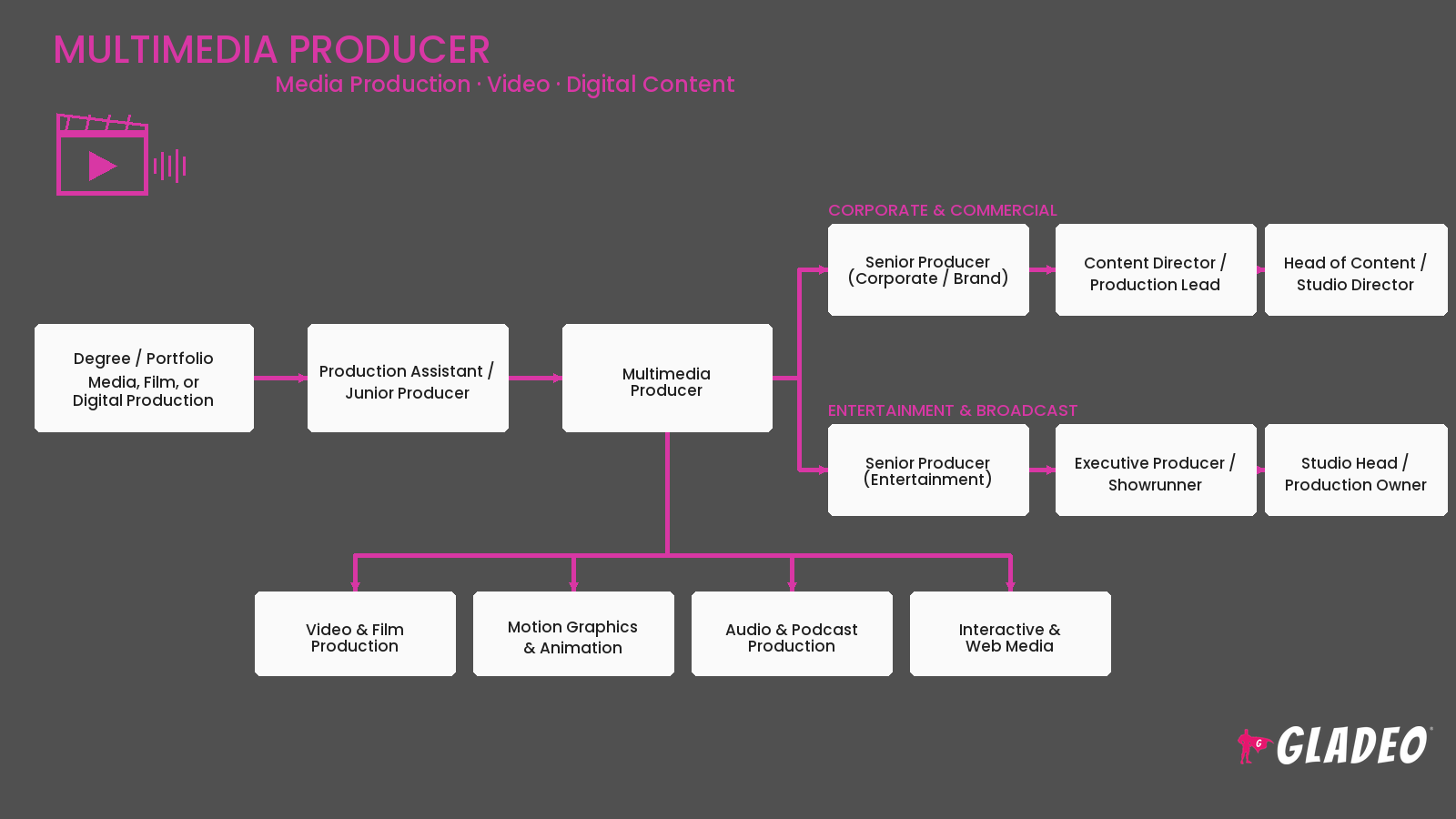
- Move from Associate Producer into Senior or Executive Producer roles
- Pursue leadership skills to manage larger production teams
- Build a personal brand or portfolio that attracts inbound project offers
- Move toward roles like Creative Director, Head of Content, or launching your own production company
Websites:
- No Film School - nofilmschool.com
- Motion Picture Editors Guild - editorsguild.com
- ProductionHub - productionhub.com
- Podcast Movement - podcastmovement.com
- Vimeo Video School - vimeo.com/videoschool
- Stage 32 - stage32.com
- International Documentary Association - documentary.org
- Broadcast Education Association - beaweb.org
- Digital Content Next - digitalcontentnext.org
- YouTube Creator Academy - creatoracademy.youtube.com
- Adobe Creative Cloud Tutorials - adobe.com/creativecloud
- Storyblocks Blog - storyblocks.com/blog
Books:
- In the Blink of an Eye by Walter Murch
- Save the Cat! by Blake Snyder
- The Filmmaker's Handbook by Steven Ascher and Edward Pincus
- Podcasting For Dummies by Tee Morris and Chuck Tomasi
If producing multimedia content full-time isn't the right fit, your storytelling and organizational skills transfer well to several related careers.
- Video Editor
- Social Media Manager
- Marketing Coordinator
- Film and TV Production Assistant
- Photographer
- Graphic Designer
- Journalist
- Event Planner
- Public Relations Specialist
- Audio Engineer
Newsfeed

Featured Jobs
Online Courses and Tools
Annual Salary Expectations
New workers start around $58K. Median pay is $82K per year. Highly experienced workers can earn around $128K.