





Spotlights
Market Research Analyst, Consumer Insights Analyst, Marketing Analyst, Research Analyst, Survey Researcher, Brand Insights Specialist, Consumer Research Specialist, Market Intelligence Analyst, Customer Insights Manager, Marketing Data Analyst, Research Associate, Insights Analyst
Why does one soda flavor stay on shelves for decades while another disappears in a year? Why does an ad seem to know exactly what you were already thinking about buying? The answer, more often than not, is a Marketing Research Analyst who spent months figuring out what real customers actually want before a single dollar was spent on production or advertising.
Marketing Research Analysts study consumer behavior and market trends through surveys, focus groups, interviews, and data analysis, then translate what they find into recommendations that shape a company's products, pricing, and campaigns. They work closely with marketing managers, product teams, data scientists, and executives, often being the person in the room who can say with evidence, not just opinion, what customers actually think.
Using survey platforms, statistical software, and data visualization tools, Marketing Research Analysts turn thousands of scattered opinions into a clear story a company can act on. Their work matters because it replaces guesswork with evidence, which means fewer wasted ad campaigns, better-designed products, and companies that actually understand the people they are trying to reach.
- Directly influencing real business decisions with evidence you personally uncovered
- Discovering surprising, genuinely interesting truths about how people think and buy
- Blending analytical rigor with creative interpretation of human behavior
- Working across a wide range of industries, brands, and products throughout a career
Working Schedule
Marketing Research Analysts typically work full-time in an office or hybrid setting during standard business hours, though deadlines tied to product launches or ad campaigns can push hours longer for stretches. Occasional evening work is common when moderating focus groups that need to fit around participants' schedules, and some travel may be required for in-person fieldwork or client presentations. Most analysts are employed directly by companies, research firms, or agencies, with a smaller number consulting independently.
Typical Duties
- Designing surveys and questionnaires to answer specific business questions
- Conducting focus groups and one-on-one interviews with consumers
- Analyzing quantitative and qualitative data to find meaningful patterns
- Tracking market trends and competitor activity over time
- Segmenting customers by demographics, behavior, and preferences
- Presenting research findings and recommendations to marketing and executive teams
- Forecasting demand and sales trends based on research data
- Monitoring social listening tools and brand sentiment online
- Testing ad concepts, packaging, and product ideas with real consumers before launch
- Writing clear reports that translate complex data into actionable recommendations
- Collaborating with data scientists on more advanced statistical analysis
- Managing outside research vendors, panels, and fieldwork agencies
Additional Responsibilities
- Staying current on new research methodologies and tools
- Managing research budgets and vendor contracts
- Ensuring data collection follows privacy laws and ethical research standards
- Presenting findings directly to senior leadership or outside clients
- Mentoring junior researchers and research assistants
- Coordinating with outside agencies on large-scale fieldwork
- Building and maintaining ongoing tracking dashboards for brand health
A Marketing Research Analyst's morning often starts by checking dashboards that track social sentiment or an ongoing survey's overnight responses, looking for anything unusual that needs a closer look. Emails from stakeholders asking for quick data pulls or clarifications on a past study are also common early tasks.
Midday might be spent moderating a focus group, either in person or over video, guiding a conversation that reveals how real customers feel about a new product concept. On other days, midday is heads-down time analyzing a completed dataset in statistical software, looking for the story hiding inside the numbers.
Afternoons are often about communication: building a presentation deck, meeting with a marketing manager to walk through findings, or brainstorming the design of the next study. Analysts frequently end the day writing up a report that turns a pile of data into a handful of clear, useful recommendations.
Soft Skills
- Curiosity about why people think and behave the way they do
- Critical thinking and skepticism toward easy answers
- Attention to detail
- Clear communication that turns data into plain language
- Active listening, especially during interviews and focus groups
- Patience through long research projects
- Objectivity, even when findings contradict what stakeholders want to hear
- Strong presentation skills
- Collaboration across marketing, product, and data teams
- Adaptability to new research tools and methods
- Time management across multiple ongoing studies
- Genuine empathy for the consumer's point of view
Technical Skills
- Statistical analysis using tools like SPSS, R, or Python
- Survey design platforms such as Qualtrics or SurveyMonkey
- Data visualization tools like Tableau or Power BI
- Advanced spreadsheet skills in Excel
- Focus group moderation and interview techniques
- Social listening and brand monitoring tools
- Basic coding or data science skills for larger datasets
- Familiarity with CRM and customer database systems
- Understanding of sampling methods and statistical significance
- Quantitative Research Analyst: focuses on survey data, statistics, and large-scale numeric analysis
- Qualitative Researcher: leads focus groups and interviews to explore attitudes in depth
- Brand Insights Analyst: studies how consumers perceive and feel about a specific brand
- Consumer Behavior Analyst: researches why and how people make purchasing decisions
- Competitive Intelligence Analyst: tracks rival companies' products, pricing, and strategy
- Pricing and Product Research Analyst: tests how consumers respond to different prices and features
- Social Media and Sentiment Analyst: monitors online conversation and brand reputation
- Ad Testing Analyst: evaluates how consumers respond to campaigns before they launch
- Market research firms
- Advertising and marketing agencies
- Consumer packaged goods companies
- Retail companies
- Financial services firms
- Technology companies
- Healthcare organizations
- Media and entertainment companies
- Consulting firms
- Automotive companies
- Nonprofit and government research organizations
- Universities and academic research centers
The pressure in this career often comes from timing: marketing and product teams need answers fast, and a research study that takes too long to complete can miss the decision it was meant to inform. Analysts have to balance rigor with speed, delivering solid evidence on a deadline rather than a perfect study on an open-ended timeline.
Staying objective can be genuinely difficult, especially when research findings contradict what a marketing team or executive already believes or wants to hear. A good analyst has to be willing to deliver an unpopular truth clearly and back it up with evidence, which requires real professional confidence.
The tools and methods in this field keep changing, from new statistical software to AI-powered analytics, which means analysts have to keep learning throughout their careers just to stay effective. Occasional evening focus groups and travel for fieldwork also mean the schedule is not always a strict nine-to-five.
- Growth of AI-powered analytics and predictive modeling
- Real-time social listening and sentiment tracking
- Rise of mobile-first, shorter surveys to match consumer attention spans
- Privacy regulations reshaping how consumer data can be collected and used
- Blending quantitative and qualitative research into single integrated studies
- Growth of behavioral and neuromarketing research techniques
- DIY research platforms making basic studies accessible to smaller companies
- Increasing personalization driven by micro-segmentation of audiences
- Rise of video-based qualitative research and diary studies
- Greater focus on recruiting diverse, representative research samples
Many Marketing Research Analysts were the kind of kids who wanted to know why people made the choices they did, whether that meant noticing why a certain toy was popular or asking classmates lots of questions just out of curiosity. They often enjoyed taking and creating quizzes and surveys, sometimes running informal polls among friends just for fun.
An interest in psychology, human behavior, and pop culture trends often paired with a comfort with math and numbers, an unusual combination that turns out to be exactly what this career needs. Many also grew up fascinated by advertising itself, noticing how a commercial or campaign was trying to influence them.
Most Marketing Research Analysts hold a bachelor's degree in marketing, market research, statistics, psychology, or business, with coursework in research methods and data analysis. Some analysts pursue a master's degree, particularly for roles that involve advanced statistical modeling or leadership of a research function within a larger company.
Students can take courses in relevant subjects such as:
- Statistics
- Marketing Research Methods
- Consumer Behavior
- Psychology
- Data Analysis and Data Science
- Marketing Principles
- Economics
- Communications
- Survey Design
- Business Analytics
Hands-on experience through internships at research firms, agencies, or corporate marketing departments makes a real difference when it comes to hiring, since it shows a candidate can actually run a study rather than just describe one from a textbook. Building comfort with real datasets and research software, even informally through school projects, gives students a strong head start.
- Take statistics and psychology classes as early and often as possible
- Practice creating and analyzing your own surveys or class polls
- Join a marketing, DECA, or business club at school
- Learn the basics of Excel and, if possible, a tool like Google Forms or SPSS
- Read about advertising, branding, and consumer psychology on your own
- Apply for internships with market research firms, agencies, or corporate marketing teams
- Practice explaining a data finding clearly to someone with no background in statistics
- Get comfortable with public speaking, since presenting findings is a core part of the job
- Follow marketing and consumer trend publications to build industry awareness
- Volunteer to help analyze data or feedback for a school club or fundraiser
- Take a computer science or coding class to build basic data skills
- Practice being genuinely curious and asking good follow-up questions in conversation
- A degree program with strong coursework in statistics and research methods
- Access to real research and statistical software like SPSS, R, or Tableau
- Internship placements with market research firms or corporate marketing teams
- Faculty with real industry research experience
- Opportunities to work with real, messy datasets rather than only clean textbook examples
- Coursework covering both quantitative and qualitative research methods
- Career services with strong connections to research and marketing employers
- A capstone project involving an original research study
- Strong alumni network in marketing, research, or consumer insights
- Programs that address current data privacy and ethics standards
- Opportunities to present research findings to real audiences
- Flexible options for students balancing internships with coursework
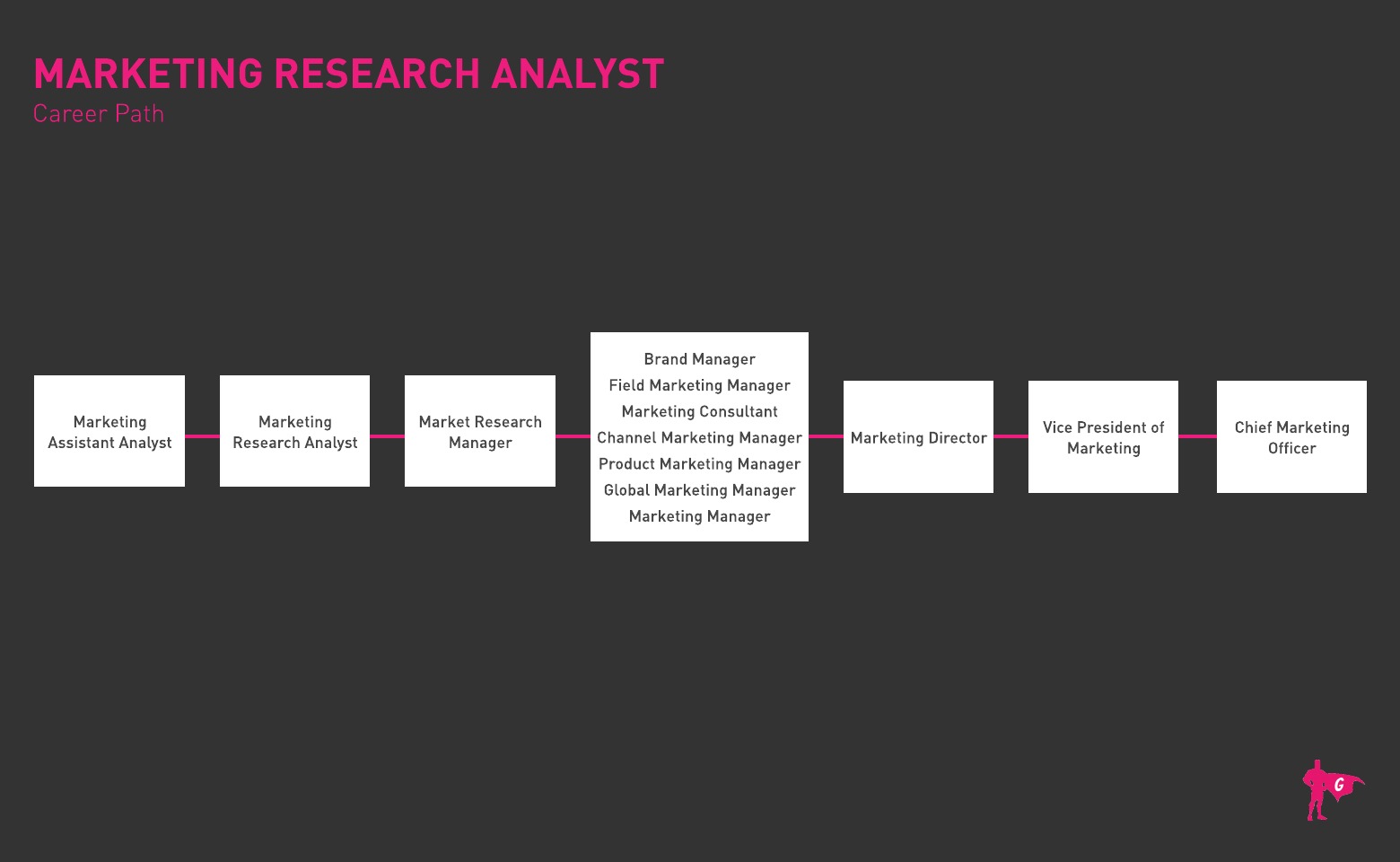
- Apply for entry-level titles like Research Assistant, Research Associate, or Junior Marketing Analyst
- Build a portfolio of any surveys, data analysis, or research projects from school or internships
- Highlight statistics, data analysis, and presentation skills clearly on your resume
- Practice explaining a past research project and what business decision it informed
- Apply to market research firms, ad agencies, and corporate marketing departments alike
- Network with researchers through informational interviews and industry events
- Learn one statistical or visualization tool well enough to discuss it confidently in interviews
- Be ready to explain how you would design a study to answer a sample business question
- Show comfort presenting findings clearly to a non-technical audience
- Look for internships that offer hands-on experience running real studies
- Demonstrate curiosity about consumer behavior in your cover letter and interviews
- Follow up after interviews referencing something specific from the conversation
- Build deep expertise in a specific research method, like advanced statistics or qualitative moderation
- Take ownership of larger, higher-stakes research projects
- Build a reputation for insights that consistently lead to real business results
- Learn to present confidently and persuasively to senior leadership
- Pursue a master's degree or professional certification in market research
- Mentor junior analysts and help train them in research methods
- Move from individual analyst work into managing a research team
- Advance toward roles like Director of Consumer Insights or VP of Marketing Research
Websites:
- Insights Association - insightsassociation.org
- American Marketing Association - ama.org
- ESOMAR - esomar.org
- Pew Research Center - pewresearch.org
- GreenBook - greenbook.org
- MarketingProfs - marketingprofs.org
- Quirk's Marketing Research Review - quirks.com
- Market Research Society (UK) - mrs.org.uk
- Harvard Business Review - hbr.org
- Nielsen Insights - nielsen.com/insights
- Qualtrics XM Institute - qualtrics.com/experience-management
- Pew Research Methods Center - pewresearch.org/methods
Books:
- Marketing Research by Naresh K. Malhotra
- Thinking, Fast and Slow by Daniel Kahneman
- Predictably Irrational by Dan Ariely
- How Brands Grow by Byron Sharp
If formal market research isn't the right fit, your analytical and people-focused skills apply well to several related careers.
- Data Analyst
- UX Researcher
- Marketing Manager
- Business Analyst
- Advertising Account Planner
- Product Manager
- Brand Manager
- Public Opinion Pollster
- Statistician
- Data Journalist
Newsfeed

Featured Jobs
Online Courses and Tools
Annual Salary Expectations
New workers start around $52K. Median pay is $74K per year. Highly experienced workers can earn around $102K.