





Spotlights
Industrial Designer, Product Development Designer, Consumer Product Designer, Packaging Designer, Furniture Designer, Toy Designer, Appliance Designer, UX Product Designer
Commercial products are everywhere—from office chairs and store displays to kitchen appliances, electronics, and packaging. Before these products ever reach stores or businesses, they must first be carefully planned, tested, and refined to ensure they are functional, attractive, and practical for everyday use.
That responsibility belongs to Commercial Product Designers. These creative professionals develop products that balance style, usability, durability, and cost-efficiency. Their work helps companies create products that not only look appealing but also perform well and meet the needs of customers and businesses alike.
Commercial Product Designers begin by researching market trends, customer preferences, and product functionality. They sketch concepts, create digital renderings, and develop 3D models or prototypes to test how a product will look and function in real-life situations. During the design process, they carefully consider factors such as materials, manufacturing methods, safety standards, sustainability, and overall production costs.
Working closely with engineers, manufacturers, marketing teams, and business clients, Commercial Product Designers refine their ideas until the final product is ready for production. They may also make improvements based on testing results or consumer feedback to ensure the product delivers the best possible user experience.
Because companies constantly compete to attract customers and improve product performance, Commercial Product Designers play a major role in helping businesses stand out in the marketplace. Their designs can strengthen a company’s brand, improve customer satisfaction, and turn everyday products into successful commercial innovations.
- Turning creative ideas into real, tangible products used in everyday life
- Playing a key role in shaping new products from concept to final production
- Contributing to innovation by improving product function, design, and user experience
- Working with modern design tools, prototyping systems, and advanced manufacturing technologies
- Collaborating with engineers, marketers, manufacturers, and other creative professionals
- Seeing designs move from early sketches to successful commercial products in the market
- Solving real-world problems through practical and visually appealing design solutions
- Having opportunities to influence how people interact with products in homes, offices, and public spaces
Commercial Product Designers typically work full-time in design studios, corporate offices, research facilities, or manufacturing environments. Their schedules may vary depending on product development deadlines, client demands, and production timelines. During product launches or major projects, they may spend additional hours refining designs, testing prototypes, and coordinating with production teams.
Typical Duties
- Research consumer needs, market trends, and competitor products to guide product development
- Develop product concepts through sketches, brainstorming sessions, and digital illustrations
- Create detailed 2D drawings and 3D product models using CAD software
- Collaborate with engineers, manufacturers, and marketing teams throughout the design process
- Modify and improve designs based on testing results, technical limitations, or client feedback
- Select suitable materials, finishes, colors, and manufacturing methods for products
- Prepare technical specifications, product measurements, and production guidelines
- Build or supervise the creation of prototypes and mock-ups for testing and presentation
- Evaluate product functionality, ergonomics, durability, and user experience
- Ensure products meet safety standards, quality requirements, and manufacturing regulations
- Coordinate with production teams to ensure products can be manufactured efficiently and cost-effectively
- Present product concepts and final designs to clients, stakeholders, or management teams
- Review prototypes and recommend adjustments before mass production begins
- Monitor design trends, emerging technologies, and sustainable production practices
- Assist in branding and packaging decisions to support product marketing and sales
Additional Responsibilities
- Maintain organized records of sketches, design revisions, prototypes, and technical files
- Stay updated on new design software, materials, and manufacturing technologies
- Participate in product development meetings and collaborative planning sessions
- Ensure compliance with environmental, safety, and industry regulations
- Analyze customer feedback and product performance to improve future designs
- Manage project timelines and coordinate with multiple departments during development
- Train or mentor junior designers and design assistants when needed
- Support innovation by contributing fresh ideas and creative solutions for new products
A Commercial Product Designer’s day usually starts with reviewing ongoing projects, checking design updates, and meeting with clients or team members to discuss product goals, user needs, and brand direction. They spend much of their day developing ideas through sketches and digital models using CAD and 3D software, while also researching trends, materials, and competitor products to improve their designs.
They also work closely with engineers and manufacturers to ensure their designs can be produced efficiently and meet quality standards. This includes refining details, evaluating prototypes, and making adjustments based on feedback. Before the day ends, they often prepare presentations, update design files, and finalize revisions for upcoming production stages.
Soft Skills
- Creativity
- Communication
- Problem-solving
- Collaboration
- Adaptability
- Attention to detail
- Organization
- Time management
- Critical thinking
- Visual thinking
- Leadership
- Customer-focused thinking
Technical Skills
- 3D modeling and rendering software
- Computer-aided design (CAD)
- Sketching and concept visualization
- Prototyping and model-making
- Knowledge of materials and manufacturing processes
- Ergonomic and usability design
- Product testing and evaluation
- Graphic presentation skills
- Design research
- Project management
- Packaging and branding basics
- Digital presentation software
- Consumer Product Designers: Create products for household and everyday consumer use.
- Furniture Designers: Develop furniture for homes, offices, and public spaces.
- Packaging Designers: Design product packaging that is functional and visually attractive.
- Medical Product Designers: Create healthcare tools, medical devices, and assistive products.
- Toy Designers: Design toys, games, and entertainment products for children and families.
- Sustainable Product Designers: Focus on environmentally friendly products and materials.
- Technology Product Designers: Work on electronics, smart devices, and wearable technology.
- Consumer product companies
- Industrial design firms
- Manufacturing companies
- Technology and electronics companies
- Furniture and home goods companies
- Automotive manufacturers
- Medical device companies
- Sports equipment companies
- Packaging and branding agencies
- Retail product development companies
Commercial Product Designers are expected to turn ideas into practical, functional, and market-ready products that meet both client needs and business goals. This requires a deep understanding of user behavior, market trends, manufacturing processes, and product performance. Designers must carefully balance creativity with practicality, ensuring that every concept is not only visually appealing but also feasible, safe, and cost-effective to produce.
To achieve this, they spend significant time on research, testing, and collaboration with engineers, manufacturers, and marketing teams. They are also expected to constantly stay updated with new materials, technologies, and design trends to remain competitive in the industry. Because product development often involves tight deadlines, revisions, and strict budget constraints, designers may experience high pressure and long working hours—especially when preparing for product launches or solving unexpected design and production challenges.
Many Commercial Product Designers showed an early interest in how everyday objects are made and how they work. As children, they may have enjoyed building things from scratch, assembling toys or models, sketching product ideas, or redesigning items they used at home. They were often curious about why certain products were comfortable, useful, or visually appealing, and they liked experimenting with ways to improve them.
They were also likely to enjoy creative and hands-on activities such as drawing, crafting, LEGO building, woodworking, or DIY projects. Many had a strong interest in art, design, and problem-solving games that involved shaping ideas into something physical. Even at a young age, they may have liked imagining new inventions, exploring how things are manufactured, or taking apart objects just to understand how they function.
Commercial Product Designers typically need at least a bachelor’s degree in industrial design, product design, engineering, fine arts, or a related field. Many employers prefer candidates with strong portfolios that demonstrate creativity, technical ability, and problem-solving skills.
Common college courses include:
- Industrial and Product Design
- Computer-Aided Design (CAD)
- 3D Modeling and Rendering
- Materials and Manufacturing Processes
- Ergonomics and Human Factors
- Product Development
- Sketching and Visualization
- Design Research
- Marketing and Consumer Behavior
- Prototyping and Model Fabrication
Hands-on experience is extremely important. Many Commercial Product Designers gain experience through internships with design firms, manufacturers, or consumer product companies. Students often build portfolios by creating prototypes, product concepts, and 3D renderings using industry-standard software such as SolidWorks, Rhino, Fusion 360, KeyShot, Blender, or Adobe Creative Suite.
- Take electives related to art, design, technology, engineering, and drafting to build strong creative and technical foundations
- Practice soft skills by joining activities like art clubs, robotics clubs, business clubs, or entrepreneurship programs
- Improve drawing and visualization skills through sketching, painting, and digital illustration practice
- Learn basic design tools such as Photoshop, Illustrator, or beginner CAD software if available
- Participate in school projects that involve creating prototypes, models, posters, or product concepts
- Volunteer for creative tasks such as designing school materials, event booths, or simple product mock-ups
- Explore how everyday products are designed by watching videos, reading articles, and studying real-world examples
- Take short online courses in product design, 3D modeling, or industrial design fundamentals
- Build simple projects at home like DIY crafts, 3D designs, or concept product ideas to practice creativity
- Experiment with problem-solving by redesigning everyday objects to make them more useful or efficient
- Develop a small portfolio of sketches, concepts, and design projects to showcase your skills
- Join competitions or design challenges that involve innovation, creativity, or engineering solutions
- Start learning how products move from idea to production by observing manufacturing or design processes
- Seek feedback from teachers, mentors, or peers to improve your design thinking and presentation skills
- Explore internships, workshops, or shadowing opportunities in design studios or manufacturing companies
- Courses in industrial design, product development, and manufacturing
- Training in CAD software, rendering tools, and prototyping methods
- Hands-on studio projects and workshop experience
- Access to fabrication labs, 3D printers, and model-making equipment
- Opportunities for internships with design firms or manufacturers
- Programs that emphasize creativity and technical problem-solving
- Portfolio development support
- Instructors with real industry experience
- Collaboration opportunities with engineering or business students
- Career services and networking opportunities with design professionals
- Courses that combine aesthetics, usability, and manufacturing knowledge
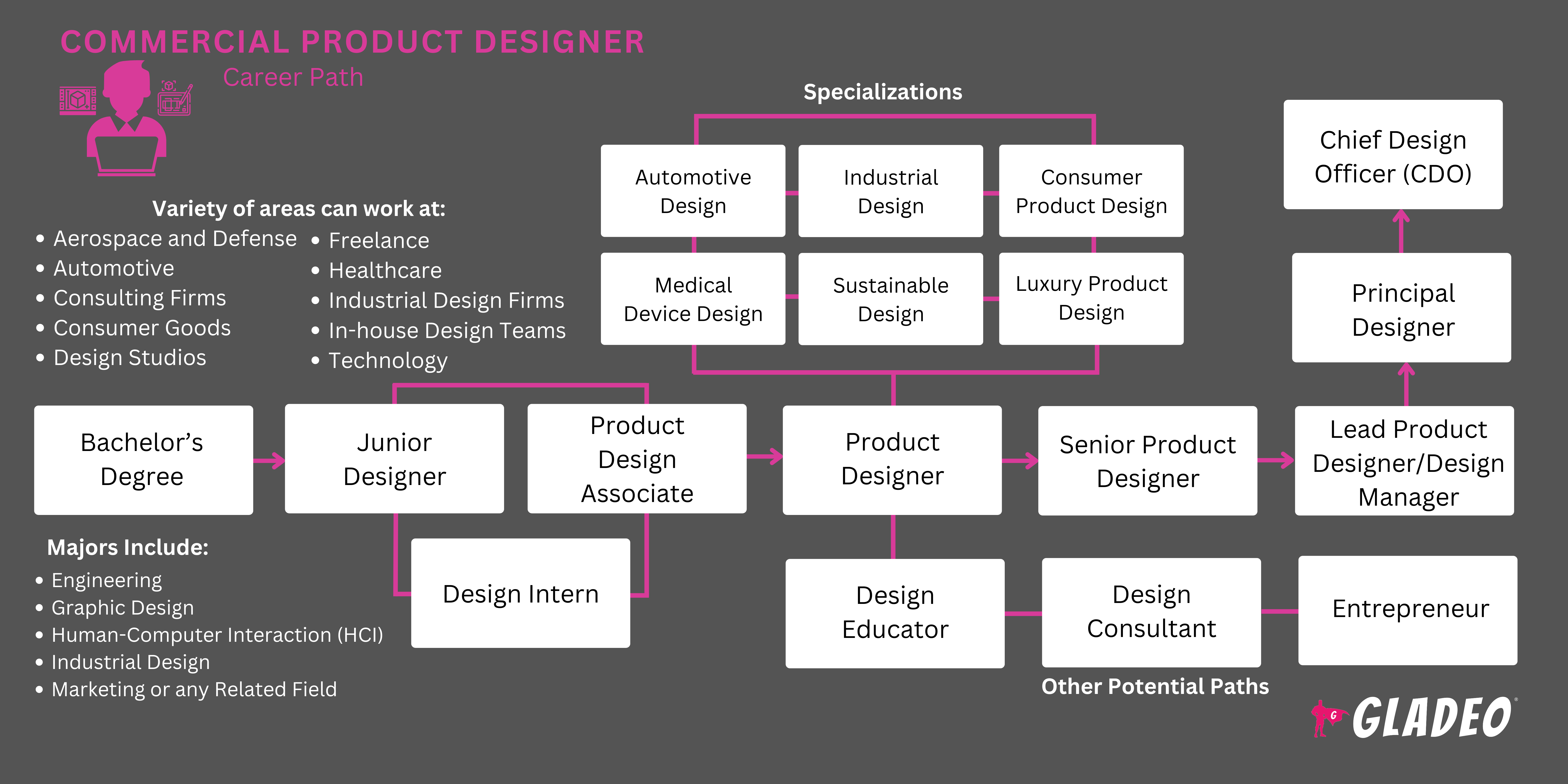
- Apply for entry-level roles such as junior product designer, industrial design assistant, or CAD designer.
- Build a strong portfolio featuring sketches, prototypes, renderings, and product concepts.
- Learn industry-standard software such as SolidWorks, Rhino, Fusion 360, KeyShot, Blender, or Adobe Creative Suite.
- Complete internships with design firms, manufacturers, or product companies.
- Network with designers, engineers, and manufacturing professionals.
- Attend design expos, trade shows, and industry conferences.
- Practice presenting design ideas clearly and professionally.
- Highlight teamwork, creativity, and problem-solving skills on your résumé.
- Gain experience with prototyping, model-making, and product testing.
- Stay informed about product trends, sustainability, and emerging technologies.
- Maintain a professional portfolio website and online design presence.
- Volunteer for design competitions or collaborative innovation projects.
- Strengthen expertise in product development, manufacturing, and user-centered design.
- Learn advanced CAD, rendering, and prototyping techniques.
- Develop leadership and project management skills.
- Take courses or certifications in sustainable design, UX design, or manufacturing technologies.
- Build strong relationships with engineers, clients, suppliers, and production teams.
- Seek opportunities to lead product development projects.
- Transition into larger design firms or global manufacturing companies for more complex projects.
- Expand your portfolio across different industries and product categories.
- Mentor junior designers and contribute to team leadership.
- Stay updated on emerging technologies, materials, and consumer trends.
- Develop expertise in innovation, branding, and market strategy.
- Advance into roles such as Senior Product Designer, Design Manager, Creative Director, or Product Development Director.
Websites:
- Industrial Designers Society of America (IDSA)
- Core77
- Behance
- Dezeen
- Designboom
- Yanko Design
- SolidSmack
- ArchDaily
- AIGA – The Professional Association for Design
- Dexigner
- Coroflot
- Fast Company Design
Books:
- The Design of Everyday Things by Don Norman
- Sketching: Drawing Techniques for Product Designers by Koos Eissen and Roselien Steur
- Universal Principles of Design by William Lidwell, Kritina Holden, and Jill Butler
- Designing for People by Henry Dreyfuss
- Change by Design by Tim Brown
Commercial Product Design is a fast-growing field as companies continue to invest in innovative, user-friendly, and well-designed products. However, traditional design, engineering, and manufacturing roles still remain strong career options for those who want to explore related but more specialized or established paths.
For those who want to work in a more traditional or closely related environment, there are several alternative career paths to consider, such as:
- Industrial Designer
- Furniture Designer
- Packaging Designer
- UX/UI Designer
- Interior Designer
- Mechanical Drafter
- Toy Designer
- Graphic Designer
- Exhibit Designer
- Product Development Specialist
- Automotive Designer
- Creative Director
Newsfeed

Featured Jobs
Online Courses and Tools
Annual Salary Expectations
New workers start around $59K. Median pay is $76K per year. Highly experienced workers can earn around $99K.